


If you’ve ever picked up a skincare product and wondered whether salicylic acid, glycolic acid or azelaic acid is the ingredient your skin needs, you’re not alone. These names appear everywhere, from face washes to serums, often alongside promises of fewer pimples, smoother skin or a more even complexion.
Although all three have a place in skincare, they work differently. And choosing between them is less about which ingredient is trending and more about what you’re trying to address.
First, Know What Each Acid Does
Salicylic acid: For clogged pores and oily skin
If blackheads and whiteheads are your main concern, salicylic acid is worth understanding. It’s a beta hydroxy acid (BHA) that helps loosen dead skin cells and clear buildup inside pores. This makes it particularly useful in products designed for oily, acne-prone skin.
Glycolic acid: For uneven texture and dullness
Glycolic acid belongs to the alpha hydroxy acid (AHA) family. It works mainly on the skin’s surface, helping remove dead cells that can make skin appear rough or dull. Because it exfoliates, stronger formulations or frequent use may irritate sensitive skin.
Azelaic acid: For acne and lingering discoloration
Azelaic acid is often discussed in connection with acne, redness and post-inflammatory hyperpigmentation. Its anti-inflammatory and pigment-regulating properties make it relevant when pimples leave dark marks behind.
Which Ingredient Should You Look For?
Here’s a simple way to think about it:
| Your main concern | Ingredient to understand |
| Blackheads, whiteheads and clogged pores | Salicylic acid |
| Rough texture and surface dullness | Glycolic acid |
| Acne with redness or dark marks | Azelaic acid |
These aren’t strict categories. More than one ingredient may be appropriate, depending on your skin and the product formulation.
Why More Exfoliation Isn’t Always Better
The concentration of an ingredient matters, but so does the type of product carrying it. A wash-off cleanser isn’t necessarily equivalent to a leave-on serum, and using both together can sometimes be too much.
If your routine already contains an exfoliating cleanser, think carefully before adding another acid-based product. Stinging, persistent tightness and peeling are reasons to reconsider what you’re using, not signs that stronger treatment is working.
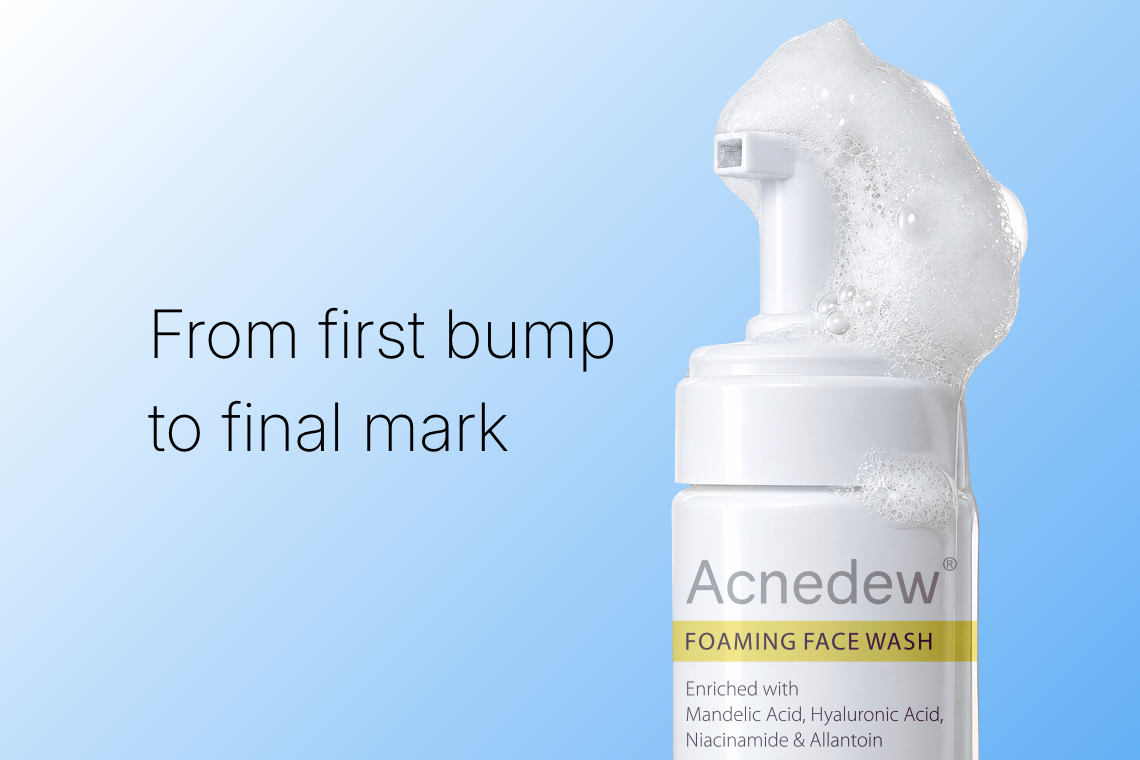
For everyday cleansing, Acnedew Antiacne Foaming Face Wash from Innovative Pharma contains salicylic acid alongside niacinamide, glycerine and allantoin. It offers an acne-focused cleansing option without requiring an elaborate multi-acid routine.
Prefer a cleansing bar? Acnedew Soap, formulated with aloe vera and tea tree oil, offers a different cleansing format. It’s not a substitute for an azelaic acid treatment, and the two products don’t need to be used together.
What Matters More Than the Ingredient List?
Your skin’s response. An ingredient can be well studied and still not suit everyone, particularly when used too frequently or alongside other active products.
Choose formulations based on your concern, introduce them gradually and make room for moisturiser and daily sunscreen. Understanding what goes into your skincare is useful; knowing when your skin has had enough is just as important.